9 min read
Renewable Energy as an Investment Opportunity
May 19, 2023
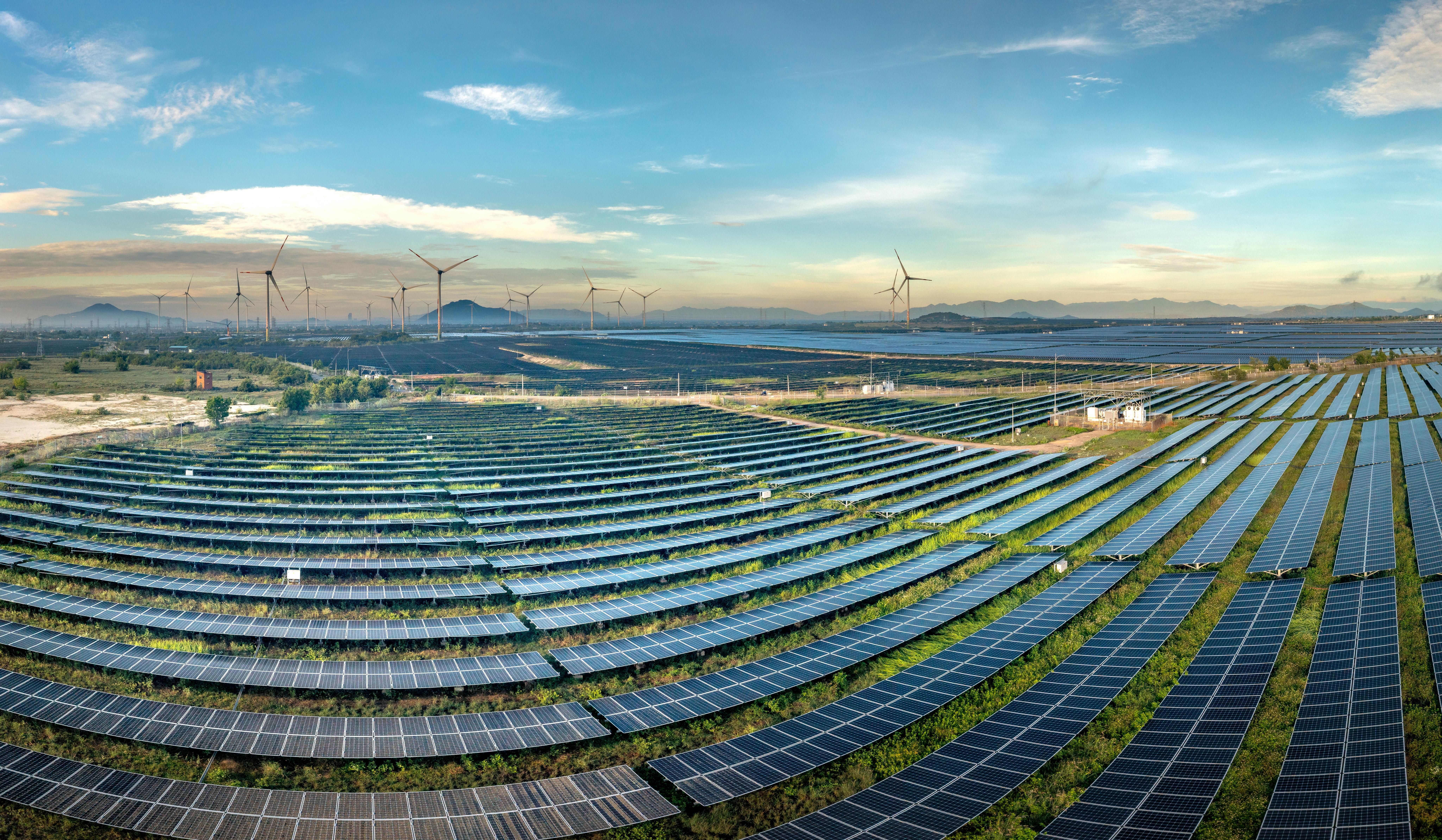
Renewable Energy as an Investment Opportunity
How Renewable Assets Are Transforming into Digital Blockchain Tokens
The Shift Toward Renewable Energy Investment
Over the past decade, renewable energy has moved from a niche environmental initiative to one of the most significant global investment opportunities. Governments, institutions, and private investors are increasingly allocating capital to solar, wind, battery storage, and other clean energy projects.
This shift is driven by several factors:
• Rising global energy demand
• Government decarbonisation targets
• Technological improvements reducing costs
• Growing institutional demand for sustainable assets
Large infrastructure investors now see renewable energy projects as long-term, stable assets capable of generating predictable cash flows through power purchase agreements and grid participation.
Solar farms, wind farms, and battery energy storage systems are now considered core infrastructure investments, similar to toll roads or airports.
The Emergence of Tokenised Renewable Assets
A new trend is now emerging at the intersection of renewable energy and financial technology: tokenisation.
Tokenisation is the process of converting ownership of a real-world asset into digital tokens recorded on a blockchain. These tokens represent a share of the underlying asset and can be transferred or traded digitally.
Instead of owning a traditional unit in an infrastructure fund, investors may hold digital tokens that represent fractional ownership of a renewable energy asset.
For example, a solar farm worth $100 million could be divided into thousands of blockchain tokens. Each token could represent a small portion of the project and its revenue stream.
This model opens the door for more flexible investment structures and broader investor participation.
Why Blockchain Matters for Energy Investment
Blockchain technology offers several advantages for renewable infrastructure:
Transparency
Ownership records and transactions are stored on an immutable ledger, allowing investors to verify asset ownership and transfers.
Liquidity
Traditional infrastructure investments are often illiquid. Tokenisation may allow assets to be traded more easily on digital markets.
Fractional Ownership
Investors can gain exposure to large infrastructure projects without needing millions of dollars.
Automated Cash Flow Distribution
Smart contracts can automatically distribute revenue generated by the energy project to token holders.
This creates a more efficient system for managing investment structures.
Institutional Adoption Is Growing
Major financial institutions are beginning to explore blockchain-based asset tokenisation.
For example, asset managers such as BlackRock have launched tokenised funds on blockchain infrastructure, demonstrating how traditional financial products can be represented digitally. These funds maintain a stable value while providing exposure to underlying assets like short-term treasuries.
Tokenisation is increasingly being explored across several asset classes including:
• Government bonds
• Money market funds
• Real estate
• Infrastructure assets
• Renewable energy projects
This trend signals a broader shift toward digitally native financial markets.
How Renewable Energy Tokens Could Work
A tokenised renewable energy project might operate like this:
A solar or wind farm is developed.
The project company issues digital tokens representing ownership shares.
Investors purchase tokens through a regulated digital asset platform.
Revenue from electricity sales flows into the project.
Smart contracts distribute returns to token holders.
The result is a digital asset backed by a real-world infrastructure investment.
Potential Benefits for Investors
Tokenised renewable investments could provide several advantages:
Access to infrastructure investments
Historically restricted to large institutional investors.
Portfolio diversification
Exposure to energy infrastructure alongside traditional assets.
Sustainability alignment
Investment in projects supporting the energy transition.
Programmable finance
Automated governance and revenue distribution.
The Future of Renewable Energy Finance
Renewable energy and blockchain technology are converging to reshape how infrastructure investments are structured, funded, and traded.
If tokenisation continues to develop, renewable energy projects could become part of a new generation of digital financial assets backed by real-world infrastructure.
For investors, this may represent a new frontier where sustainable infrastructure and digital finance intersect.
