9 min read
Unlocking Real-World Assets on the Blockchain
Jun 21, 2025
Unlocking Real-World Assets on the Blockchain: A Look at RWA Tokenisation
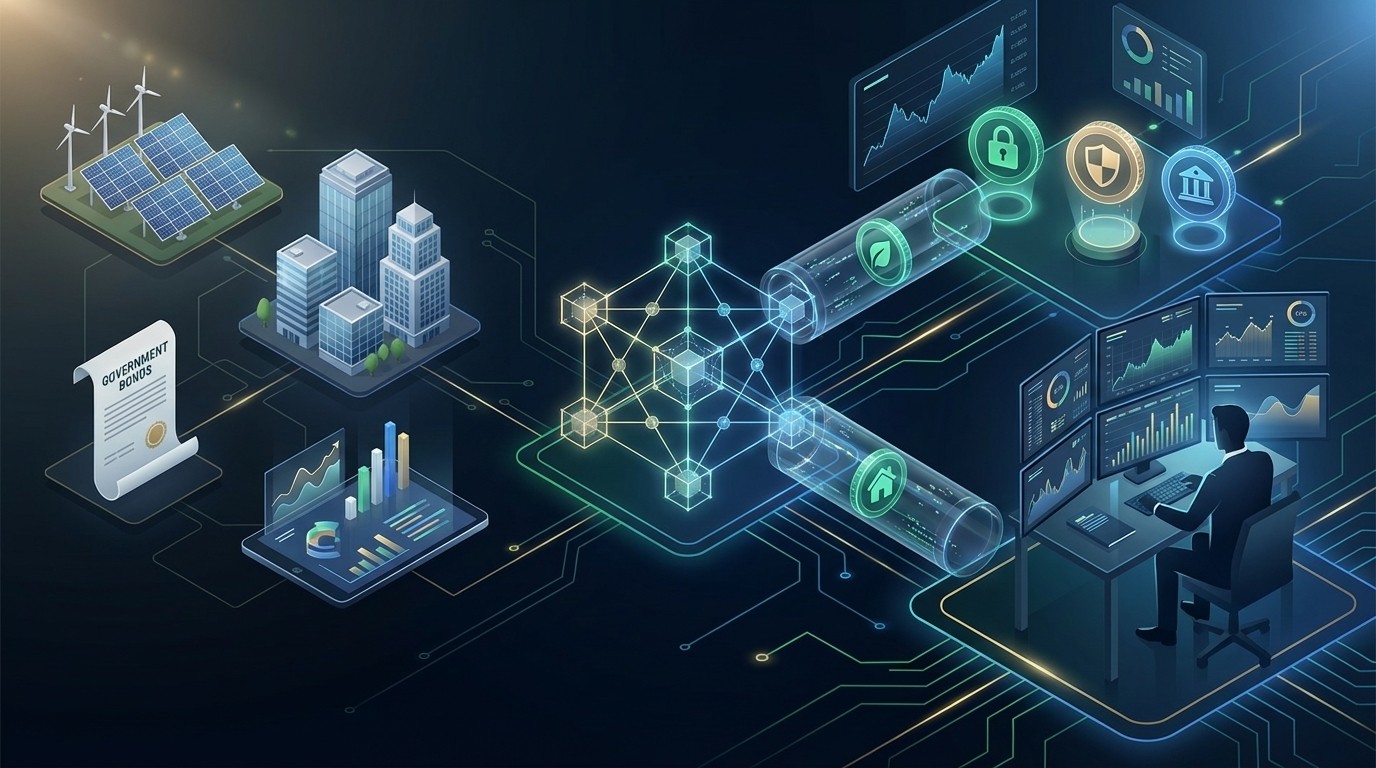
Real‑world asset (RWA) tokenisation is transforming how we invest in and manage tangible assets such as bonds, equity, real estate and commodities. By converting these traditionally illiquid assets into digital tokens on a blockchain, issuers can democratise access, reduce settlement times and improve transparency. Major asset managers and corporations have already launched tokenised products, providing a glimpse of how this technology can reshape finance.
What Is Real‑World Asset (RWA) Tokenisation?
RWA tokenisation refers to the process of creating blockchain‑based tokens that represent ownership or claims on real‑world assets. These can include government bonds, private‑equity funds, shares in infrastructure projects or even fractions of a building. Each digital token is recorded on a distributed ledger—typically a public or permissioned blockchain—allowing fractional ownership, automated settlement and verifiable provenance.
Traditional investment products often carry high minimums and require lengthy settlement processes. By contrast, tokenised assets can be purchased in smaller increments, are represented digitally and can be traded on regulated alternative trading systems or secondary markets, often with near‑instant settlement through smart contracts.
Key Benefits
Democratised access: Tokenisation lowers minimum investment amounts, making asset classes such as private equity or commercial real estate accessible to a broader investor base. For example, Hamilton Lane’s Equity Opportunities Fund V normally required an average investment of about $5 million; when tokenised through Securitize, the minimum was reduced to $20,000.
Liquidity and fractional ownership: Tokens can be subdivided and traded, allowing investors to hold portions of an asset and sell them without offloading the entire position.
Operational efficiencies: Automated settlement and record‑keeping reduce administrative overhead and errors. For instance, Franklin Templeton’s OnChain U.S. Government Money Fund uses a public blockchain to record ownership, leading to faster settlement and continuous distribution of yields.
Transparency: Public blockchains provide a verifiable audit trail. Investors can independently verify holdings and transactions without relying solely on trust in intermediaries.
How RWA Tokenisation Works
Asset selection and structuring: The issuer identifies a real‑world asset (e.g., a bond, private equity fund or real estate project) and sets up a legal entity—often a special‑purpose vehicle (SPV)—to hold the asset. Regulatory compliance is critical, so these vehicles typically comply with securities laws in their jurisdiction.
Token creation: Digital tokens are minted on a blockchain platform (e.g., Ethereum, Polygon, Stellar or a permissioned chain like JP Morgan’s Onyx). Smart contracts codify rights and obligations—such as dividend payments or redemption rules—and manage the distribution of tokens to investors.
Distribution and trading: Accredited or retail investors purchase tokens through a broker‑dealer or digital asset platform (e.g., Securitize). Tokens can then trade on approved secondary markets. Some platforms integrate with wallets so investors can self‑custody their tokens.
Ongoing management: Cash flows (interest, dividends, distributions) are automatically disbursed to token holders via smart contracts, and corporate actions (e.g., redemption or buy‑backs) are executed programmatically. Regulatory reporting and compliance processes remain central, albeit with potentially lower costs and real‑time transparency.
Real‑World Examples of RWA Tokenisation
BlackRock: Tokenised U.S. Dollar Treasury Fund (BUIDL)
In March 2024 BlackRock announced the BlackRock USD Institutional Digital Liquidity Fund (BUIDL)—a tokenised fund launched with Securitize. BUIDL is backed entirely by U.S. Treasury bills, repurchase agreements and cash. Investors receive digital BUIDL tokens on a public blockchain and earn daily yield through the Securitize platform【892473205732719†L40-L48】. The fund caters to qualified investors and provides on‑chain settlement while still being governed by U.S. securities law. This real‑world example illustrates how tokenisation can bring a regulated, low‑risk product to blockchain participants.
Franklin Templeton: OnChain U.S. Government Money Fund
Franklin Templeton’s OnChain U.S. Government Money Fund is the first U.S. registered mutual fund to use a public blockchain for transaction records. It invests in U.S. government securities and repurchase agreements. All fund shares are recorded on the Stellar blockchain, giving investors real‑time visibility into holdings and enabling quicker settlement. The fund distributes yield directly to token holders, proving that everyday money‑market instruments can be tokenised without compromising regulatory compliance.
Hamilton Lane: Tokenised Private‑Equity Fund on Polygon
Hamilton Lane, one of the world’s largest private‑equity investors, tokenised its Equity Opportunities Fund V in partnership with Securitize. The tokenised feeder fund reduces the minimum investment to $20,000—down from about $5 million—and is built on the Polygon blockchain. The structure opens access to a historically high‑performing asset class to qualified individual investors. The feeder fund is offered by Securitize’s broker‑dealer and alternative trading system, providing a regulated environment while leveraging blockchain efficiencies.
Santander and the European Investment Bank: Blockchain Bonds
Banco Santander issued a digital bond on the public Ethereum network in 2019 and later replicated the process. The bonds are issued directly on‑chain, with cash custody and token transfers handled via blockchain. This demonstrates how banks can streamline bond issuance and transfer. Separately, the European Investment Bank issued a €100 million digital bond on Ethereum, showing that supranational institutions are also adopting tokenisation.
Société Générale: Digital Green Bond
In November 2023, Société Générale FORGE issued a €10 million digital green bond on Ethereum. The bond’s proceeds are allocated to environmental and social initiatives, and the bond is fully tokenised. According to the bank, this structure enhances transparency for investors regarding use of proceeds and lifecycle emissions.
Siemens: Digital Bond in Germany
In early 2023 Siemens issued a €60 million digital bond under Germany’s Electronic Securities Act. The bond was issued directly on a public blockchain without the need for paper‑based global certificates. Issuing on‑chain allowed same‑day payment and settlement, reducing settlement delays and administrative overhead. Siemens’ experiment shows how corporates can streamline debt issuance and attract technologically savvy investors.
Other Institutional Initiatives
JPMorgan Onyx and Project Guardian: JPMorgan’s Onyx platform and its Project Guardian pilot have enabled tokenised deposits, money‑market fund shares and government bond repurchase agreements. These pilots highlight how tokenisation can support intraday repurchase transactions and cross‑border settlements while remaining compliant.
Fidelity, Apollo and Others: Asset managers such as Fidelity and Apollo Global Management are developing tokenised funds or exploring digital asset platforms. Their participation underscores mainstream interest in bringing regulated investment products to the blockchain.
Challenges and Considerations
While the momentum behind RWA tokenisation is accelerating, several challenges remain:
Regulatory clarity: Different jurisdictions treat tokenised securities differently. Ensuring compliance with securities laws, KYC/AML requirements and investor protections is essential. Issuers often collaborate with broker‑dealers (e.g., Securitize) or operate under existing regulatory frameworks, as Franklin Templeton and Hamilton Lane have done.
Infrastructure and standards: The industry lacks harmonised standards for token formats, custody and interoperability. Institutions may choose permissioned or public chains depending on use case and risk tolerance. Robust custody solutions and secure smart contracts are critical.
Liquidity: Secondary markets for tokenised RWAs are still nascent. Market‑maker involvement and institutional adoption are needed to improve liquidity. Projects like JPMorgan’s Onyx aim to address this by connecting institutional buyers and sellers.
Education and adoption: Investors and regulators must understand both blockchain technology and the underlying assets to gauge risk appropriately. Building trust through successful pilots and clear disclosures is paramount.
Conclusion
Real‑world asset tokenisation bridges traditional finance and blockchain, offering lower investment thresholds, faster settlement and greater transparency. From BlackRock’s BUIDL fund and Franklin Templeton’s OnChain money fund to Hamilton Lane’s tokenised private‑equity feeder fund and digital bonds from Santander, Société Générale and Siemens, institutions are demonstrating tangible benefits of putting real assets on‑chain. While regulatory and infrastructure hurdles remain, the growing list of real‑world examples suggests that tokenised RWAs are moving from proof‑of‑concept to mainstream adoption. Investors should expect to see more innovative products and greater market participation as technology and regulation evolve.
